



الأسئلة المتكررة
كيف تقرأ تاريخ إنتاج الإطار؟
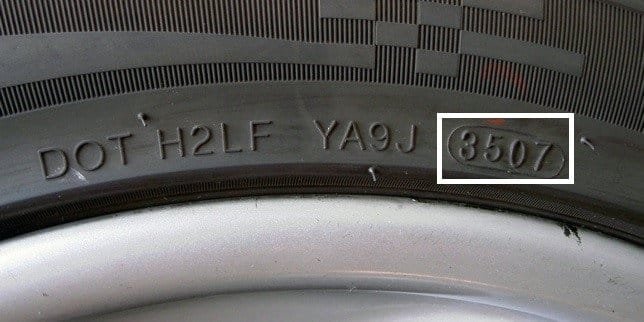
يحتوي كل إطار على رقم دفعة مطبوع على الجدار الجانبي على طول منطقة الحافة كما هو موضح في الصورة أدناه. يشير الرقمان الأولان (35) إلى أسبوع الإنتاج، بينما يشير الرقمان الأخيران إلى سنة الإنتاج. وهذا يعني أن الإطار المعني تم تصنيعه في الأسبوع 35 من عام 2007.
ماذا يشمل سعر الإطار؟
الأسعار على الموقع الإلكتروني تشمل التركيب والموازنة والتخلص من إطاراتك القديمة وضريبة القيمة المضافة.
كم من الوقت سيستغرق تركيب الإطارات؟
في معظم الحالات، يمكن ترتيب التثبيت في نفس اليوم. ومع ذلك، لمساعدتك على التخطيط بشكل أفضل، نوفر لك خيارًا على الموقع الإلكتروني لتحدد فيه التاريخ والوقت المفضلين لديك. وسيقوم أحد موظفي خدمة العملاء لدينا بإعادة تأكيد ذلك.
هل يمكنني تركيب إطارات سيارتي اليوم؟
نعم!
على الرغم من أن تقويم المثبتين لدينا يظهر تأخيرًا بيوم واحد للمواعيد المتاحة، إلا أن معظم عمليات التثبيت تتم في نفس اليوم.
التأخير في التركيب يعتمد على المركب والإطارات التي تختارها. على سبيل المثال، إذا كان المنتج الذي اخترته متوفرًا في مستودعنا بالرياض واخترت أيضًا موقع المركب في الرياض، فمن المحتمل أن نتمكن من مساعدتك في التركيب في نفس اليوم. وإلا، فسيتم التركيب في اليوم التالي.
The best way to guarantee a same day installation is to identify the tire and installation option you want, and ask via chat facility on our main/home page.
ما هو محاذاة العجلات، هل أحتاجها حقًا؟
تحتاج سيارتك إلى محاذاة العجلات فقط عندما تكون إطاراتها متآكلة بشكل غير متساوٍ أو عندما يكون هناك انحراف في أحد الجوانب. ومع ذلك، يوصى بفحص محاذاة عجلات سيارتك مرة واحدة على الأقل في السنة.
>تتكون محاذاة العجلات من ضبط زوايا العجلات بحيث تكون عمودية على الأرض ومتوازية مع بعضها البعض. الغرض من هذه المحاذاة هو زيادة عمر الإطارات إلى أقصى حد، وتحسين كفاءة استهلاك الوقود، وضمان سير السيارة بشكل مستقيم ومستقر عند القيادة على طريق مستقيم ومستوٍ.
بعض أعراض عدم محاذاة السيارة هي:
تآكل الإطارات غير المتساوي أو السريع
التجول على طريق مستقيم ومستوٍ
الانحراف أو الانجراف عن الخط المستقيم
انحراف عجلة القيادة إلى أحد الجانبين أثناء القيادة على طريق مستقيم ومستوٍ.
لا يمكن محاذاة عجلات السيارة التي تحتوي على أجزاء تعليق أمامية مفكوكة أو مهترئة. سيقوم الفني أولاً بفحص الأجزاء المهترئة وإبلاغك بذلك قبل البدء في عملية المحاذاة.
أفضل نوع من محاذاة العجلات هو محاذاة العجلات الأربع. تتمتع العديد من السيارات اليوم بإعدادات محاذاة خلفية قابلة للتعديل، ولكن حتى بالنسبة للسيارات التي لا تحتوي على تعديلات خلفية، فإن محاذاة العجلات الأربع تسمح للفني بتحديد أي مشاكل في التتبع الخلفي وتعويضها عن طريق تعديلات في المقدمة.
بعد الانتهاء من ضبط محاذاة العجلات، يجب أن تقود السيارة على طريق مستقيم ومستوٍ وتتأكد من أن السيارة تسير بشكل مستقيم وأن عجلة القيادة في الوضع الصحيح مع محاذاة الأضلاع. إذا لاحظت وجود مشكلة، أعد السيارة إلى ورشة الصيانة واطلب من الفني قيادتها وضبط إعدادات المحاذاة.
ما هو توازن العجلات ولماذا هو مطلوب؟
يتيح موازنة العجلات دوران الإطارات والعجلات دون التسبب في أي اهتزازات. ويتم ذلك عن طريق فحص أي نقاط ثقيلة على مجموعة العجلة والإطار وتعويضها بوضع وزن رصاصي مقاس على الجانب المقابل من العجلة من حيث توجد النقطة الثقيلة. تتسبب الإطارات غير المتوازنة في اهتزاز السيارة عند سرعات معينة، عادةً ما بين 80 و 120 كم/ساعة. تظهر العجلة غير المتوازنة الأعراض التالية:
اهتزاز في عجلة القيادة عند سرعات معينة على الطرق السريعة
اهتزاز في المقعد أو أرضية السيارة عند سرعات معينة على الطرق السريعة
حتى اختلال توازن بوزن 10 أو 20 جرامًا في العجلة الأمامية يكفي لإحداث اهتزاز ملحوظ في عجلة القيادة عند سرعة 100 كم/ساعة تقريبًا. يشعر الكثير من الناس بسرور مفاجئ لانسيابية قيادة سياراتهم بعد موازنة العجلات الأربع. في بعض الأحيان، عند الاصطدام بحفرة أثناء القيادة، يسقط الوزن الرصاصي المثبت على العجلة، مما يؤدي إلى اختلال توازن العجلة.
مسرد المصطلحات المتعلقة بالإطارات
المواءمة
يتكون محاذاة العجلات من ضبط زوايا العجلات بحيث تكون عمودية على الأرض ومتوازية مع بعضها البعض. الغرض من هذه المحاذاة هو زيادة عمر الإطارات إلى أقصى حد، وتحسين كفاءة استهلاك الوقود، وضمان سير السيارة بشكل مستقيم ومستقر عند القيادة على طريق مستقيم ومستوٍ. تعد الصدمات الشديدة (الاصطدام بالحفر أو الأرصفة) وتآكل أجزاء التعليق من الأسباب الرئيسية لعدم المحاذاة.
إطارات لجميع الفصول
تم تصميم الإطارات لتوفير قوة جر جيدة في مجموعة متنوعة من ظروف الطرق، بما في ذلك الطرق المبتلة والجافة والطينية والثلجية. كما يحد هذا التصميم من أداء الإطار في الظروف القاسية، أو عند مقارنته بالإطارات المصممة لفئة معينة.
نسبة العرض إلى الارتفاع
مصطلح يصف نسبة ارتفاع الإطار إلى عرضه. إذا كان ارتفاع جدار الإطار الجانبي 65% من عرضه، فإن نسبة العرض إلى الارتفاع ستكون 65. في حجم الإطار المعبّر عنه بـ 205/65-15، الرقم 65 هو نسبة العرض إلى الارتفاع.
التوازن
الحالة التي تدور فيها مجموعة الإطارات والعجلات مع توزيع وزنها بالتساوي. يتيح موازنة العجلات للإطارات والعجلات الدوران دون التسبب في أي اهتزازات. ويتم ذلك عن طريق فحص أي نقاط ثقيلة على مجموعة العجلات والإطارات وتعويضها عن طريق وضع وزن رصاصي مقاس على الجانب المقابل من العجلة من حيث توجد النقطة الثقيلة.
Bar
هذه وحدة قياس لضغط الهواء داخل الإطارات.
خرزة
يتم وضع طوق دائري من الأسلاك الفولاذية، ملفوف أو مقوى بحبال فولاذية، في الجزء الداخلي من قطر الإطار.
إطار مائل
إطار مصنوع بحيث يتم وضع الطبقات بزوايا متبادلة أقل من 90 درجة بالنسبة لخط الوسط للمداس. تمنح هذه الطبقات المتقاطعة الإطار قوته، ولكنها تولد حرارة أثناء التشغيل وتحد من تآكل الإطار وأدائه.
الهيكل العظمي
جسم الإطار الموجود أسفل المداس والجدران الجانبية؛ يُسمى أيضًا الغلاف.
رقعة التلامس
الجزء من المداس الذي يلامس الطريق أثناء التشغيل.
كورد
خيوط المواد التي تشكل طبقات الإطار. يمكن أن تكون الخيوط مصنوعة من الألياف الزجاجية أو الحرير الصناعي أو النايلون أو البوليستر أو الفولاذ.
علامات DOT
Each tire has a required Department of Transportation number imprinted on at least one of its sidewalls. That number begins with the letters “DOT” and may contain up to 12 additional numbers and letters. The first and last digits are the most important for the tire owner. The first two letters/numbers identify the manufacturer of the tires. The first two digits represent the week of production and the last two digits represent the last two digits of the year of production. So, 5114 as the last four numbers indicates that the tire was produced in the 51st week of the year 2014.
Footprint
The full portion of the tire that makes contact with the surface of the road.
Friction
The resistance of the tire tread as it moves on the road; this is the force that causes the tire to grip to the road.
Groove
The space between two adjacent tread ribs; also called tread grooves.
Hydroplaning
A skimming effect caused by tires losing contact with a surface covered by water. This results in loss of grip
مؤشر التحميل
An assigned number ranging from 0 to 279 that corresponds to the load carrying capacity of the tire.
M+S, M/S or M & S
Indicates that a tire can reach particular standards for performance in mud and snow conditions.
Max. Inflation Pressure
The maximum air pressure to which a cold tire may be inflated; found stamped onto the tire’s sidewall.
OE and OEM
OE means “Original Equipment” and refers to the tires included with a new vehicle at the time of purchase. The vehicle’s manufacturer selects these tires to provide the optimal performance based on the performance characteristics of the vehicle. “OEM” stands for “Original Equipment Manufacturer.”
Overall Diameter
The diameter of an inflated tire without any load.
Overall Width
The distance between a tire’s outside sidewalls, including lettering and designs.
P Metric
Uniform designation of tire sizes in metric measurements originally introduced by American tire manufacturers in 1977. Commonly called “P-metric series.” A typical P-metric tire size is P215/70R-15.
Placard
A small label typically located on the edge of the driver’s door or inside the glove compartment of a vehicle. A placard contains information on the vehicle such as the manufacturer’s recommended tyre inflation pressure.
Plus-Sizing
A practice allowing drivers to customize the appearance and performance of their vehicle by mounting lower profile tires on larger diameter wheels. One-inch greater wheel diameter is referred to as plus-one, two inches is plus-two… and so on. Using a lower profile tire with a greater diameter rim allows the overall diameter to remain about the same.
Ply
A rubber-coated layer of fabric containing cords that run parallel to each other; extends from bead to bead and goes between the inner-liner and belts of tread.
Ply Rating
This indicates the load carrying capacity of the tire in terms of its construction. A “C” indicates the tire has a 6-ply load carrying capacity. The tire is not actually built with 6 plies, but contains one or two plies of equivalent strength. A “D” is an 8-ply rating, and an “E” is a 10-ply rating. If there is no letter, the tire has a standard 4-ply rating.
PSI
Pounds per Square Inch. This is the standard unit of measurement for air pressure within tires.
Radial Ply
Tyre construction where the cords in the body run at 90 degrees to the centerline of the tread.
Rim Width
Distance between the two opposite inside edges of the rim flanges.
Rolling Resistance
The force required to keep a tire moving at a constant speed. The lower the rolling resistance, the less energy needed to keep a tire moving.
Rotation
Moving tires from side to side or front to rear on a vehicle in a prescribed pattern to achieve uniform wear on all tires. Rotations should be performed regularly every 10,000 KMS
Shoulder
The part of a tire where the sidewall and tread meet. Certain tire design features shoulder blocks for better traction.
Sidewall
The part of the tire between the tread and the bead.
المقاس
An expression that defines a particular tire in terms of its width, height, rim diameter, aspect ratio and construction type. 225/50-R17 expresses tire size using the metric system.
Speed Rating
Speed rating represents the maximum speed your tyre is capable of maintaining. It is always represented by a letter. Take a 195/65R15 87S tire- The Speed rating here is represents by the Letter S which translates to the tire’s ability to maintain speeds of up to 180 km/h.
Tyre Pressure Monitoring System (TPMS)
TPMS is an automated system that monitors the air pressure in a vehicle’s tires. When air pressure in one or more tires drops 25 percent or more below the correct pressure, a warning alerts the driver.
Traction
The friction between a tire and the road surface; the amount of grip provided.
Tread
The part of the tire that comes into contact with the road. The tread type is distinguished by the design of its ribs and grooves
Tread Depth
The distance measured in the major tread groove nearest the centerline of the tyre from the base of the groove to the top of the tread.
Treadwear Indicator
Narrow bands, sometimes called “wear bars”, that appear across the tread when 2/32″ of tread remains.
Tread Width
The width of a tire’s tread.
UTQG (Uniform Tyre Quality Grading)
A tire information system that provides consumers with ratings for a tire’s traction (AA to C) and temperature (A to C)
Valve
A device mounted in the wheel that lets air in or out of the tire. Valves include caps to keep out dirt and moisture and a valve to prevent air from escaping.
ماذا يعني UTQG؟
Uniform Tire Quality Grading System (UTQG) rates tires on their treadwear, traction performance, and temperature resistance. All tires sold in the KSA must carry a smart RFID tag affixed to them which also displays these characteristics. These are also found on the sidewall of most passenger tires, with the exception of winter and light truck tires.
ماذا تعني درجة تآكل المداس؟
Treadwear grade indicates how long your tires tread will last in relation to other tires. For instance, a tire with a grade of 300 will last twice as long as a tire with a grade of 150. However, actual tire performance can differ greatly for many reasons, including driving style, climate, inflation pressure and weight vehicle is carrying.
ماذا تعني درجة الجر؟
The traction grade rates the ability of your tire to stop on wet pavement. Traction performance is given as AA, A, B or C, which you will find on the sidewall of your tire. Tires with an AA grade stop faster on wet pavement than those with a B or C grade. So AA is the highest rated while C is the lowest rates. The traction tests do not test tires for cornering, acceleration, driving at high speed or driving on dry roads and cover straight line braking only.
ماذا تعني درجات الحرارة؟
Temperature grades are an indication of a tire’s resistance to heat. Sustained high temperature (for example, driving long distances in the hot Arabian weather), can cause a tire to deteriorate, leading to an increased chance of a blowout or tread separation.
From highest to lowest, a tire’s resistance to heat is graded as “A”, “B”, or “C”. As per Gulf Standards Organization and EMSA, The temperature grade of a vehicles tire sold in the Gulf region must be “A” or “B”.
كفاءة الوقود ومقاومة الدوران
Every tire has a batch number stamped on the sidewall along the bead area of the tire as seen in the below image. The first 2 digits (35) indicate the week of production and the last 2 digits indicate the year of production. This means that the subject tire is manufactured in the 35 week of 2007.
الضوضاء الخارجية للإطار
A tire’s exterior noise grading is expressed in decibels (dB). To help you make an informed decision, PowerTire.sa makes the exterior noise rating of every tire, where possible, available to you.
Choosing a tire with a good noise rating will minimize the impact of your driving on the surrounding environment. Increase of noise of just a few decibels makes a significant impact. The quietest tires have a decibel rating of 68 or below. The loudest tires would have noise levels of 72dB and above.
These grades are neither applicable nor available for professional off-road tires, temporary-use spare tires, studded tires, tires used only for racing, tires whose speed rating is less than 80 km/h and tires whose nominal diameter is smaller than 254 mm or bigger than 635 mm.
أداء المكابح والتماسك على الطرق المبتلة
The wet grip provides you with information on a key safety aspect of a tire: its grip on wet roads. Tires with excellent grip in the wet have shorter braking distances on wet roads.
To help you make an informed decision, PowerTire.sa makes the wet grip rating of every tire, where possible, available to you.
A tire’s wet grip capacity is expressed in grades from A to G, with A the highest wet grip performance. These are measured by braking in a car travelling at only 80 km/h. The difference in braking distances between each grade is roughly 3m – the average length of a car. This makes the difference between A and G, 18meters, which is 6 car lengths! This distance could be the difference between being in a road accident or not.
These grades are neither applicable nor available for professional off-road tires, temporary-use spare tires, studded tires, tyres used only for racing, tires whose speed rating is less than 80 km/h and tires whose nominal diameter is smaller than 254 mm or bigger than 635 mm.